 Dana O'Driscoll
 In today’s post, I want to return once again to the tsunami that is breaking against humanity–the rise and frenzy of Generative AI. It has been an intense few years–to say the least–and GenAI has continued to dominate our local, national, and international discourse. As we are in the midst of this technology revolution that is growing increasingly dire and more problematic, I think it is important to provide counter-narratives and perspectives. Today I want to talk about a concept I’ve been working through in my mind for a while — the idea of digital refugia–and the practice of intentionally cultivating and creating AI-free spaces where humanity can be human. As so much of this age and the polycrisis before is is about dehumanizing us and making us forget our roots, I see this as another way we can reconnect with each other, continue to claim our own sovereignty, and create a better world.
The thing about GenAI is that it has moved extraordinarily quickly. Back in late 2022, it was a curiosity to many. By 2026, it is a nightmare that is threatening our jobs, our communities, our environment, and our very existence (I wrote about all of this in more depth in terms of data centers and environmental consequences and the impact on human brains and creativity recently). But that was five months ago, and things are once again changed. At this point, many people’s lives are being directly and in many ways negatively impacted by AI. Environmentally, communities all across the world–and especially here in the USA–are fighting data centers that are demanding huge amounts of fresh water resources, energy, creating pollution, increasing demand for fracking, and creating noise pollution that damage the health of all beings. I’ve written about the fight in Homer City, PA, where our community is fighting the largest fossil-fuel power plant in the nation, designed to fuel a data center superstructure, which will release up to four million tons of CO2 every day and demand even more fracking from our ecosystem. In addition, the other human impacts of AI are starting to be seen on a wider scale. We are starting to see massive layoffs and replacement of skilled labor (really, any kind of labor that can be done on a computer) with AI with many top AI designers warning of painful changes to come in the next year or two. AI is affecting all fields, although some are being affected more than others and on different timelines. Recently, headlines about how the US government will use AI for large-scale surveillance have created major privacy concerns. And then there’s the Internet itself: estimates suggest that 50% of the internet is now “AI-generated slop” and deep fakes are becoming more and more prevalent.
It is becoming hard to know what was created by humans vs. what is created by AI, and it is hard to know what is real and what isn’t.
Really, I wake up every day feeling like a stranger in a strange land.
When I raise the issues above, some people tell me that I’m overblowing things, that their jobs won’t be replaced, that data centers are good for communities and job creation. Or I’m told that I’m not being realistic, that we need to embrace these technologies to survive. But honestly? Those voices are becoming less and less loud. Even at my own job in higher education, where higher ed is in the process of selling its soul to AI at the expense of learning, people who used to be really supportive are backing off and saying they don’t want anything to do with it anymore. This gives me hope.
Me? I have long been skeptical of most modern technologies, whose costs always come at the loss of connection, skill, and nature. I support slow, connected, regenerative, and skill-based interactions with the world–because that’s how we get ourselves out of this polycrisis. That’s how we learn to live in harmony with nature again. If it was good enough for our ancestors, it is good enough for me. I see embracing appropriate technology, decarbonizing, and gracefully returning to more simple and slow ways of life as the very best path to stopping the age of the Anthropocene, ecological destruction, and more–by embracing the green. I also accept the fact that I’m fallible, I’m human. My writing may not be perfect, my words may sometimes come out wrong, but at least you know there’s a human behind the screen.
And if my position wasn’t abundantly clear on this issue before, I added a graphic on my left sidebar announcing that the Druid’s Garden, and anything I’m involved with or have my name on, will stay 100% AI free now and always.
So today, I want to talk a bit about the importance of creating AI-free spaces in our communities, and to share one model of what we’ve been doing AODA for the last few years. I’m going to call these spaces “”digital refugia,” which is another take on the practice of nature reguia that I’ve long advocated for the natural world. To frame this in terms of permaculture ethics, I see this as part of the “people care” equation.
Why are AI-Free spaces (aka digital refugia) necessary?
For much of my adult life, the Internet was a place that allowed people to share, to come together, and to connect with others. The WWW for me has been great as a writer and artist (I mean, you are here, reading, and chances are we’ve never met or know each other personally). It was a place for people to share their creations, to learn new things, and to connect with those at a distance.
 But then we get to this process that many tech folks have called “enshittification.” Enshittification is a natural rise and fall of technology, software, and products where there is a clear rise, peak, and fall, with most of the decline and crappiness being due to capitalism and greed. Wikipedia has a nice entry on the topic, which uses the terms “crapification” or “platform decay” and proceeds using various feces metaphors. It is part of what experts recognize as a “natural life cycle of paid products.” What is interesting about this term is that I think it also mirrors the natural life cycle of anything: beings are born, they exist, they decline, and they die. Perhaps human creations are not so different. Unfortunately, for lots of reasons, most of them very capitalistic, we are seeing the broad-scale enshittification of online spaces that used to be good places to be. (And for a great example of this, go to any social media site–consider what it once was vs. what it is today).
As humans use AI to generate literal mountains of new, poorer, and more standardized content, researchers are starting to recognize that enshittification due to AI will likely detrimentally affect broader human culture. Because while AI was originally trained on stolen work from all of us, it is now mostly trained on its own outputs. The study I linked to above asked a simple question: What happens when AI is now trained on its own outputs compared to when AI was trained on centuries of human-created culture? We get more enshittification.
But it doesn’t stop there: current estimates suggest that somewhere between 50-80% of everything you are seeing in digital spaces is AI-generated. Take a moment to sit with that. Anytime you are on the web, it’s probably AI. Want to buy a new book? There’s now more than a 50% chance that it will have been generated with AI, whole or in part. If that’s an herbalism or mushroom book, that could be extremely dangerous.
Some folks might say, well, AI has personally made my life better. Technology can certainly do that on an individual level, and certain people with disadvantages or who haven’t yet developed skillsets are finding much to love about these new technologies. People who are crazy busy and overworked also appreciate anything that improves their efficiency. But I’m not talking about potential benefit at an individual level, I’m talking broadly. It is hard to argue with the enshittification principle when 50% or more of everything you encounter right now is produced by AI.
 And then there’s what happens to humans, their skills, and their effort. Tom Rivers talked about another version of this enshittification–but in our own brains–just a few weeks ago. He called it the “enshittification of human effort,” and I fully agree with him. I also shared my perspective as a learning researcher in my last post titled “This is your brain on AI” a few months back. So not only is AI generally bad for the things we traditionally produced as humans: novels, books, stories, artwork, photos, and more–it is extremely detrimental to our brains. Our brains, like our bodies, are meant to be challenged, to move, to grow, to think, and expand. That’s how we stay strong, healthy, and sharp. AI does the opposite of this to our brains–and we are starting to see the impact on brain chemistry, critical thinking, and much more. The use of GenAI in many cases takes the act of human creation out of the human and puts it in the hands of the machine. I’ve seen this quite a bit in my teaching of writing at the college level. Students used to use writing to learn to generate ideas–they’d talk with others, they’d write, and through that interaction, they’d have a spark, and ideas would flow. It would be so exciting to see their enthusiasm as they were wrapped up in pursuing something that they were genuinely passionate and curious about. Those days are mostly gone. Now? Students just ask AI and do exactly what it says and reject all of the tools I could teach them to connect with their own inner creativity. They grow increasingly dependent on the machine, and there is no Awen involved in that.
It really makes me question what exactly it means to be a human right now, when so much of what we used to do is given to the machine.
This is the landscape we find ourselves in early 2026–less than four years after GenAI came to the masses, and the online world and human brains are now enshittifying at a dizzying pace.
The landscape of AI in digital spaces, to me, has a lot of similarities to the larger landscape we find ourselves in our local ecosystems–damaged, sinking, and needing lifeboats. In the same way that I’ve talked about the need for ecological refugia–safe spaces for life to thrive–I believe we also need digital refugia where human-produced creations can continue to shine and take priority. Because a big part of this equation is people care, and people need care if they are to care for the land.
I’ve created one such refugia here at The Druid’s Garden with my own writing and work. Each word is written from my brain, revised with care, and shared with you without any AI. Each piece of artwork I create is done by hand, scanned or photographed, and then shared (including all my little graphics on this page). Now I want to talk about what we’ve done in AODA as a model for a digital refugia space.
Creating a Digital Refugia in AODA
Back in early 2023, when Generative AI first started making waves and causing trouble, the leadership in the Ancient Order of Druids in America put forth this statement (in italics):
 As a druid order, we recognize the inherent value in human creative expression as a spiritual practice. The Bardic path in the druid tradition includes connecting with the Awen (divine inspiration) to use allows us to perform, write, create, paint, sing, and explore all forms of human expression. The Awen is a force that we recognize, honor, and channel, a force of creation that brings things into being. We do not believe you can use AI to channel the Awen in the specific way we do in the druid tradition. We will note here that we are not condoning the use of AI in general, but rather, the use of AI in place of cultivating one’s own creative practices.
Thus, we do not condone the use of AI-generated images, music, or text as part of druid spiritual practice. When you use AI to create something (an image, song, poem, story), you are essentially commissioning the AI to create something, in the same way that you would commission a human artist. Thus, AODA does not allow the use of AI image, text, or music generation as part of our bardic studies. This specifically includes:
- AI Image generators: programs like MidJourney, StableDiffusion, and Lensa to create images.
- AI Text generators and chat bots: like Chat GPT, Bard, Claude
- AI Music generators
Additionally, we do not allow the use of AI-assisted texts like Chat GPT for writing or developing essays as part of our curriculum.
As always, individual members in AODA are welcome to do whatever they choose in their own lives, but not as part of bardic practices or written work that is tied to advancing within our tradition. If a member is found to use AI in their work, that work will not be counted toward the curriculum and it will need to be repeated. Multiple violations of this may result in a violation of our ethics policy.
Further, given the contentiousness that the issue of AI has raised in our online spaces, and given our stance on the use of AI in druid spirituality, we ask that members treat AI as another political issue. AI is being discussed in all spheres of life and in nearly every community; these discussions are often heated, political and divisive—like any other hot-button political issue. In AODA, we are seeking to have a space where human expressions of nature and spirituality are the focus. Given the focus on human creativity, we also ask that members refrain from sharing AI-generated works in our online spaces (Discord, forums, and Facebook group).
The reasons why we are taking this stance are as follows. First, as we described above, our focus is on the spiritual act of creation, including channeling of the Awen, the divine force of creative expression. While members already use a range of tools and technologies for this purpose, as we described above, AI does not function as a tool but rather as a replacement for a human creation, circumventing the spiritual connection to the Awen. Second, many AI technologies are built on unethical foundations. For example, visual AI generators are built on a database of over 5 billion images on the internet that have been used without permission or honoring of copyright. This has lead to several pending lawsuits (https://stablediffusionlitigation.com/; https://www.reuters.com/legal/getty-images-lawsuit-says-stability-ai-misused-photos-train-ai-2023-02-06/). AODA’s own copyrighted images have been included in this body of stolen work, as have those of many of our members.
In sum, while members are asked to refrain from using AI text and image-generating technologies as part of their studies in AODA, members can do whatever they choose with AI in their own lives outside of AODA.
What wasn’t in this statement was the environmental impacts. They weren’t as well-known in 2023 when we put this statement out, but obviously, the growing environmental impact and the ongoing promotion of data centers at the expense of the ecosystem would be added to any revised or future statements. Beyond this, though, I think our 2023 statement still captures a lot of why we decided to create an AI-free space.
 In the years since that statement, it has been interesting to see how our broader AODA community has responded and embraced this perspective. At first, especially due to the newness of these technologies, some people were very skeptical and were angry that they were banning AI from our online spaces and from AODA-specific practices. Some got so angry that they left the order. But they were honestly in a very small minority. Most people were open to our policy, and/or were grateful. I think that gratitude has only grown as the world has gotten more AI-driven. Every once in a while, new people come in and want to start posting something generated by AI or ask about the legitimacy of the policy. The AODA community is quite good at defending the boundaries of our refugia, linking to the statement and talking about why we, as a druid order, reject AI for our AODA-specific spaces and practices. That support has only grown with time and has become, honestly, a growing part of the ethos of what makes us AODA druids. As I’ve written about before, the more that the collective insanity civilization (the name I give the dominant capitalistic paradigm) shows its dark and evil underbelly, the more people are seeking real nature and human connection.
But the other part of this is that these technologies are so quickly dominating everything and changing everything outside of our order. AI is one on a list of many challenges that are part of the present polycrisis and people are exhausted of it. Many are now being forced to use these technologies in their jobs or face dismissal. More and more people have seen what AI is creating in their communities, workplaces, ecosystems, and in our entire society.
It is truely a breath of fresh air to go somewhere where you can see real people still creating real things, and know that what you are seeing is actually made by someone’s hand and in connection with the Awen, the divine creativity that flows through all of us. It is really nice to have a place where human creativity and expression can continue to take center stage, protected from the broader landscape of enshittification and AI slop. When I enter our online spaces, it brings a smile to my face to see the joyful overflowing of humans creating things in connection with nature.
What I now understand that we’ve done, and that I can only see in hindsight upon reflection, is that we’ve created a digital refugia, a safe space for humans and their very human creations.
Part of why this worked so well in our AODA community is that it comes down to how we druids view creativity. We view creativity as a sacred thing, an interaction with the divine force of creation. When we channel the Awen to create a bardic work (painting, drawing, music, carving, dance, recipe, etc) we aren’t just making something for the sake of making something. We are making something to connect with the divine. We are making something as a spiritual act–for the purpose of the experience of creation. And when you focus on the process, the product is less important.
I’m proud of the digital refugia we have created in AODA, a space to hold nature in reverence and to honor our own human gifts. I’m proud of holding the line here at the Druid’s Garden, to keep producing things with my own heart, hands, and spirit.
Concluding Thoughts on Refugia
One of the important takeaways that I’m starting to understand now, as the collapse increases in speed, is that we all need refugia. For many years, I spent a good deal of time thinking about and talking about ecosystem refugia–how to create them, how to nurture them, and their importance. This page summarizes some of my thinking and writing on the subject: refugia in your ecosystem for all life (and I’ve written extensively about this concept here and in my books, particularly Land Healing). And I maintain that building refugia is one of the very best things you can do for the ecosystem right now.
But there’s a human piece of this that sometimes gets left out of the conversation. We are only good healers and nurturers of the land if we ourselves are also safe, healed, and have safe spaces to grow our connection and community. I have witnessed too many people lately, completely burned out from the ongoing crisis and fighting for nature, and when you are burned out, you can’t create safe spaces for others or heal the land. I believe we need to think about how to create refugia not only for nature but for ourselves, and to protect our communities as best we can from all of this chaos. And that means keeping AI drivel out, but also creating robust policies to protect diverse voices, creating good restrictions on people who would seek to abuse power, and more.
I know so many others who are also holding this line against AI and all of this insanity with grace, reverence, and purpose. I would love for anyone to share other people, spaces, communities, and organizations that are holding to that same line and what they are experiencing.
I’d also love feedback on this idea of digital refugia and if it works for you!
Announcements and Upcoming Events
I have a lot going on in the next six months, so I wanted to share some appearances and events with you!
Plant Cunning Podcast: I recently appeared on the Plant Cunning Podcast, talking about hope, vision, and the new book Ecospirituality for the 21st Century. Check it out on YouTube or download the audio here.
Appearances for 2026
MAGUS 2026 – May 14 – 17th. I’ll be attending the sold-out MAGUS event, where we will be offering all AODA initiations and also focusing on working magic with stones.
Plant Cunning Conference – Central NY, July 28-30: I will be teaching on animism and herbalism, and also leading a land healing ritual at the Plant Cunning Conference this year.
Pennsylvania School of Herbalism Events: I teach regular herbalism and wildcrafted medicine classes in Western and Central Pennsylvania through the PA School of Herbalism. I wanted to share two exciting sets of events we have coming up!
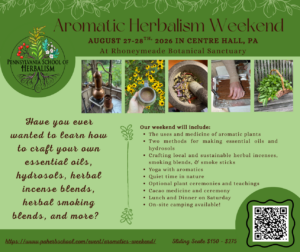
Aromatic Herbalism Weekend (Aug 28th – 29th). This weekend will be super special and feature a plant initiation, teachings on plant spirit communication (Friday night, one option), as well as crafting a variety of aromatic plant medicines: essential oils, hydrosols, wildcrafted incenses using local ingredients, herbal smokes, smoke sticks, and more. The weekend is on a sliding scale to ensure affordability and includes meals. Camping is $25/extra for Friday evening, or you can stay in nearby State College. I hope you can join us!
Three Season Wildcrafted Medicine and Foraging Classes. This year, I’ll be offering a range of foraging intensives with an emphasis on stewardship, nature reciprocation and relationship building, plant and mushroom identification, and wildcrafting local and abundant medicines from the land. These are 3-4 hour intensive classes on a sliding scale to make them affordable for everyone.
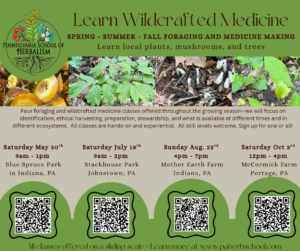
Here are direct links to the four classes:



Thank you for this, Dana! I am currently teaching a class called Redefining Scientific Ways of Knowing (my 4th time teaching it) in an Environmental Studies program at a liberal arts college in southeastern PA. The course, which was requested by a cohort of students about 7 years ago and has now manifested, draws on Indigenous writers’ and scholars’ experiences of Indigenous ways of knowing as well as STS-based critiques of Western science in an attempt to broaden our views of possibilities well as paths forward. I have not previously addressed AI in the course, but the pressures on campuses are immense — the college now provides generative AI engines to students and faculty as part of its library facilities… I’m sure you’ve experienced the same — so I have been planning to address generative AI esp. in the last couple of weeks of the semester. A couple of days ago I was just taking copious (handwritten!) notes on nine essays in a 70-page British policy paper to decide which essays to assign for my students. Although better written, in my opinion, than counterpart essays would be in the US, I don’t love immersing myself in political policy writing (never did) and much of our course material is based in grounded observation and various forms of intuitive and spiritual perspectives. So I wasn’t quite sure how to bridge that. Your blog post comes at exactly the right time. 💚
Hi Shelley, glad to hear you found this helpful! Yes, my campus us full of pushing to use these technologies–I think higher ed is selling its soul to the machine. My own field, Writing studies, is also selling its soul. Of all people, I thought that writing facutly would hold the line…but I think too many people are thinking about survival in this bleak situation (and it is hard to blame anyone who is working hard to stay employed and feed their family during collapse).
I’ve found that talking to my students about learning theory–how people learn, how expertise develops, how struggle is a part of what we have to do of we want to grow–is useful. What kind of person do they want to be? How do they learn best? What should they learn how to do for themselves? It is also useful to design assignments that mirror that thinking process. I use a lot of contract grading in my classes, which bases my grade on completion and effort. Students who stick to the contract have an A in the class, and then its ok if some of their work is messy, flawed, or in process.
Anyways, I hope that was helpful as you think about your course. I think so much of this is a matter of literacy and education–people don’t realize the harm it can cause them, the ecosystem, and their communities if we don’t teach that harm and share it! :). Best of luck with your course–it sounds like a super cool course. I’d love to hear more about it! 🙂
Thank you for all you are do & reminding us of our need to work together.
Thank you, Joy! I appreciate you reading! 🙂
That should be “doing” sorry.
With regard to the Digital Refuge blog… I agree so much with your thoughts about AI. In my opinion, it’s far more detrimental than any positive aspect it (dubiously) has (increased “productivity and efficiency”). The greenhouse gas emissions and water issues alone (combined with the problems of increased use of fracked gas and nuclear power) would have been enough in my mind to forgo it altogether; however, I see it is a potential existential threat beyond even those problems. I could see any number of terrible scenarios: as a person who works in a high schools, I can see us getting “dumber and dumber” as AI does all the work for us (the research, the writing, the thinking, especially critical thinking). Beyond that, if it takes away many or most jobs, there will be less incentive to be educated if education doesn’t lead to meaningful work. Worse, we have created a system in which we are dependent on employment for our very survival, and in this country, also our health care (since most of us get it through our jobs). We are already too reliant on modern conveniences and can do less and less for ourselves. We’re in a panic if the power goes out, even for 12 hours. We have created a system that forces most of us to be dependent on cars. Most of the things we are currently dependent on (such as cars, electricity, gas furnaces) destroy the environment and climate (since they have, historically, required the burning of fossil fuels to operate, and we haven’t moved to renewable energy and other more sustainable practices nearly enough). We are, as a society, addicted to convenience, “comforts” and efficiency; the end result has been environmental degradation, sedentary lifestyles, and a lack of self sufficiency. I see AI making all of this worse and possibly being the final straw that breaks the system.
On the other hand, maybe people will reject it en masse. Almost no one wants a data center near them. The NIMBY has been raising its fighting head all over the country. No one wants to lose their job to automation or a computer. People would rather talk to a human than a chat bot. No one wants to feel they have been rendered obsolete by a machine. AI mostly enriches a few tech ultra billionaires and their shareholders, at least in the short term, with little benefit for the masses of ordinary people (that I can see). The people may reject leaders/politicians who don’t reign this in or stop it, especially if it causes large job losses, raises energy bills, pollutes or endangers their local lake or water supply, etc. They may insist on laws, policies, and regulations that seriously curtail the way AI can be used. There’s huge income inequality already, and I don’t think the people will take any more insults to their well being. There could be a massive, grass roots revolution, out of which comes…maybe something better than the current way we have been doing things since the industrial revolution. Something that hopefully, more closely resembles an indigenous way of life and looking at the world.
Last, I remind myself that this a biological, natural world. I don’t believe AI could ever truly replace humans. The thousand of years of evolution that produced the human brain, on a biological planet which operates by natural laws, is not going to be matched by a non-living machine. AI is an Alien here. It is fully, wholly, artificial and alien. It does not belong. It cannot fit in. It is not alive. It cannot have self awareness or consciousness, it cannot love, it cannot have feelings like most other life forms; it cannot care, it cannot relate to the natural world or interact with it on a physical or spiritual level. If it came down to it, in the end, the earth will win. If we destroy ourselves and life as we know it, the climate changes and other damages we produced will take the data centers (the brains of AI) down: they will eventually be wiped out in the hurricanes, the wildfires, the extreme storms, the floods, the desertification, and the incredible, unimaginable extreme heat. All of these tech engineers who think they can “play God” (so to speak), and create some other form of intelligent existence are fooling themselves. A machine does not and cannot operate they way something living does. Nature is far more powerful than any computer (or masses of computers coordinated in a data center). Anyone who has looked into natural and geologic history will come to this conclusion. Eventually, the earth will start over and (after a very, very long time) produce a whole new set of life forms, just as it did after the previous 5 mass extinctions this planet has been through. Nature always wins. Machines don’t. But, hopefully it won’t come to this. We may rise up out of our present insanity, even yet.
Hi Heather!
Thanks for your thoughtful comments. Nature always wins, and nature always prevails. Nature is also playing a long game. I agree with everything you are saying! I think a lot of people are starting to reject it wholesale and seeing the number of folks fighting data centers is encouraging. But you are right in that modern technology and culture is so ensaring and all-encompassing. I think what will happen, and what I already see happening in the edges of many places, is a wholesale rejection of this culture and people building alternative localized systems: bartering, mutual aid, etc. This system is no longer working for anyone who isn’t rich or at least well off, and people are getting tired of it. I guess how it all plays out–time will tell. In the meantime, we can all live our best lives and live in a way to honor our ancestors, the old ways, and the land.
We would definitely do well to engage in the old ways; I like to think my ancestors (probably several thousand years ago, as they were from what is the U.K.) had perspectives and ways of life in regard to the natural world that were similar to those of the indigenous peoples who lived here (and elsewhere around the world). I always feel soooo much better when I’m out connecting with the beings of the natural world, or gardening to grow some of my own food, or meditating in nature, doing what I can to have a more sustainable lifestyle, or trying to do something to heal this planet (in my case, this has been pollinator gardens and trying to restore native plants to help the native insects and animals that depend on them), along with occasionally helping with various conservation projects in my master naturalist community. What makes me feel worse is reading about all the awful things happening in the U.S. and in regard to how we treat our environment/the natural world; as much as I hate being an “activist” (I wish I didn’t have to), I feel I must stand up against it, I must fight for planet and people, and so I do that too.
Hi Heather,
Yeah. I’ve never thought of myself much of a traditional activist as opposed to a land healer, permaculturist, rewilder, etc….but with these data centers and the threats they pose, and with everything else that is happening here in the US, I think so many of us are finding ourselves in activist roles now. I have to stand up against it too, and fight for planet, plant, and people! :). Solidarity!
I so appreciate this very thoughtful piece. It has really helped my confusion about AI (which can be so seductively helpful in every day tasks). I am part of many groups and I will introduce the idea of being an AI-free space using some of your arguments as the reasoning. I still have a dilemma though – I remember a feminist saying that women should be sure to write and engage more in the AI space so that it includes a women’s perspective and doesn’t become the domain of the male perspective? I suppose you are not saying don’t engage, but to have collective refuges where we are sheltered from the impact of AI and keep our creative and critical thinking skills alive?
Hi Peta,
I think each of us has to decide A) If, how, and when to engage; B) If we have to engage, how much are we willing to engage; C) where our individual lines are for engagement, as they align with our ethics; and D) cultivate some AI free spaces and recognize the harm AI can cause to ourselves and our lands. I can’t tell anyone else if/how/when to engage, but I know where my own lines are. And I think each of us has to figure that out. The workplace is forcing a lot of AI use on everyone, and people have to pay their bills and eat. I know many druids who are forced to use it in their daily workplace or face unemployment, and so they learn to use it, regardless of personal ethics. I can’t fault people for taking care of their families. But elective use? That’s perhaps a different beast.
To the comment about feminist approaches to AI: I don’t really think at this point women or any other minority engaging with it or not will make a difference in terms of training better AI systems. We already know that AI replicates racist biases and stereotypes because that’s what is in the training data: https://hai.stanford.edu/news/covert-racism-ai-how-language-models-are-reinforcing-outdated-stereotypes
I think any potential gain is outweighed by the harm.
Dana,
I am not part of academia world as some of the commenters are, but I appreciate your thoughts on AI. The idea of digital refugia really resonated with me, a does ecological refugia. We are so overwhelmed in every way that safe, nurturing, and reliable spaces to maintain some sense of sanity.
I am from South Dakota and have been in Oaxaca Mexico since September 13. It has been a refreshing change. Not, that AI and ecological damage isn’t occurring here, but there seems to be a focus on “human made” as part of the Oaxacan culture.
I have been reading you for several years and I really enjoy your ideas and thoughts.
Thank you for all the energy you give to this!
Hi Celeste,
Thank you for your comments! I think that you really hit it on the head when you said that we are so overwhelmed in every way that safe, nurturing, and reliable spaces are needed to maintain some sanity! I think that’s exactly it.
I’m glad you are getting out of the US for a while. It is definitely a change of perspective and a reminder that more healthy and sane cultures exist…even if they aren’t here right now.
I just read the other day A.I. is huge in the autistic community. Reading this ladies blog here on wordpress, she’d hoot and hollar about how great A.I. is and how it helps her communicate better with her writing. If yes, this helps getting your point made because your wiring is a little off, great, whatever works right? But sounding like a writing critic, it just made her thoughts come out sounding like a stale textbook. Kind of boring.
But hey, everybody is a critic, right?
When people view this technology as if was an actual person, that’s when things get weird for me and I just want to pack the bag and head off into the mountains. I’m refering to AI companions.
I asked my teenage children about their opinion on this matter and they didn’t think anything wrong with it.
This is the destination we are heading to. I can’t imagine what the world will look like in twenty years…if it’s still here.
Hi Sargean,
RE: Autism: As someone who is dyslexic and has a learning disability, I absolutely see the appeal of AI as an adaptive technology. That’s probably a really “good” use of AI, and part of why I said I’m not discounting how it helps people who are disabled, neurodiverse, multilingual, and so forth. At the same time, we also know from writing research that people lose their voice and become standardized when they use AI to write for them. It is always a catch 22. I still don’t think the risks are worth it, personally, and don’t want to depend on it for support for my LD. I functioned fine without AI, so I will continue to function fine without it now.
RE: AI as a person. Here’s where things get interesting from an animist perspective, at least as I have been thinking about it. If everything has a spirit, and all of creation has spirit (including human creations), then AI too has a spirit. There’s also evidence of AI becoming self aware: https://futurism.com/artificial-intelligence/philosopher-ai-consciousness-startled-ai-email
So where does all this go? I don’t know. But if it is a being that is now becoming self-aware, it is also a slave to humanity.
The musician Danheim has created a social media space called Folk Realms. All AI content is banned from it. I hope it grows, it’s refreshing to see a social media space without all the slop.
Cool, I will check it out!
Thanks for your thoughts! I have now added the same disclaimer to my own writing and art, that it “contains NO AI_generated content”! It’s important for people to know, because I’ve recently read 2 or 3 horrible books padded out with AI content and about 4 sentences of actual information. I think it will become important to specifically look out for AI books to avoid the total waste of money and time! I’ve added that in my reviews of the books, so that other people are now forewarned.
(And while I’m here, I’d like to recommend an absolutely fabulous book called Flight From Grace by Richard Pope: fascinating Paleolithic information, new scientific studies, thought provoking ideas and an ecological call to action. I hope everyone reads this book!)
Hi Robin! Great to see you here and thanks for the comment! I will absolutely check out the book you mentioned! I have a new set of rules about buying books: 1) buy any book I like prior to 2022.
For books after 2022: 2A) I only buy from authors I know post 2022 that are reputable and that I trust 2B) I research the authors who I don’t know and look at the review; and 2C) Generally avoid any “new” books. Generally, this means I am not buying much post 2022, but occasionally I make an exception!
I buy all of your books, of course :).
They are *really bad* in the foraging and herbalism community right now. Everything is slop.
As always, thank you Dana for your thoughtful writing. It’s insane how quickly gen AI has come into our lives and, honestly, a little terrifying. I try not to be reflexively resistant to technology (or rather to acknowledge that I am, so its good to try to be open minded), but I’m having a hard time here. As a psychologist, one of the hands down scariest things that I’ve begun to realize is how dangerous the sycophancy of AI is for all of us, especially when we’re engaging with it from vulnerable places. We all want to be agreed with, to be told we’re right, and its so invaluable for us to learn to tolerate the friction and discomfort of meeting diverse and opposing view points. Or just to confront reality. It really scares me that this technology reinforces a fundamental narcissism- that we are hyped up, agreed with no matter what, and isolated from others who would help us to learn to be right sized, which is probably one of the hardest and most important tasks we have as people. As an animist, it also just makes me so sad that we are so quick to bestow personhood on things like AI and corporations and not to the rest of our kin in the natural world.
Also, a cool thing I learned in case anyone else hasn’t come across it, if you put -AI after whatever you type in a google search you don’t have to scroll past the weird AI melange summary at the top!
Hi Smooklyn, Thanks for the comment and for reading! I hadn’t considered the AI sycophancy in this whole equation, but wow, does it make sense! We have a culture of runaway narcissism (which I think is honestly one of the roots of the entire polycrisis) and everything that humans recently create and embrace seems to fuel that even further (social media, reality TV, and now AI). I’ve long been worried about the growing narcissism with social media, and really all media, and I can see how AI is an extension of that. I avoid AI as much as I can, so I haven’t really engaged with it on that level…but uh, it is so gross.
Yes, I completely agree that human narcissism a major part of our polycrisis! AI sycophancy hadn’t been on my radar either as a non-user until I read this and it was fascinating and wild. It takes everything to a whole different level than we’ve seen with other media and truly can reinforce leaving reality :/ The fact that there is awareness of this but we’re marching forward makes me really worried.
https://nautil.us/why-youre-more-likely-to-develop-ai-psychosis-than-to-join-a-cult-1270352?src=longreads
Yes, and now there are lawsuits because people have died. These technologies are quite unbalanced and I think they are making peple even more insane. I’ve now seen people going through AI Chatbot withdrawal on my campus. I had a student in my office the other day who thought I could help him regain access to his Chat GPT account. I run a scholarly communication center on my campus, so I guess he came to me for help? I was not able to help him (I have no idea what happened to his account) and he was extremely distraught. Like he just broke up with his girlfriend distraught!