 Dana O'Driscoll
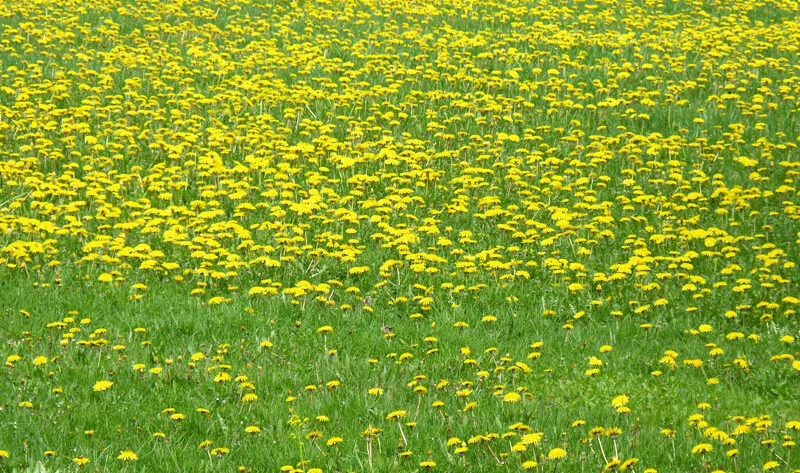
I really admire dandelions–and they are coming out in full splendor where I live right now! In my small town, there’s never quite enough money for repairs. And our old trees eventually create cracks and uproot the sidewalks. In those cracks, in the tiniest little space, the dandelion grows. Dandelion is exactly as she is: beautiful, happy, hopeful, and free. She cares not what people think of her. She simply does what she does: reclaiming sidewalks, parking lots, and grassy lawns back for nature. Dandelion is the kind of energy we need right now because, friends, we are the dandelions. We are reclaiming this world for nature. And the more that what I call the “collective insanity” civilization comes down, the more space there will be for dandelions like us to put our roots down through those cracks in the concrete, bring joy and hope with our bright flowers and healing medicine, and then spread seeds to the future.
I’ve been writing about collapse this year. These aren’t easy times, and these aren’t easy words. I’m not writing about this situation in every post–I’m trying for an every-other or every-third post approach. I have a whole roadmap of what I want to write, but it can be hard to get these words out, and I know it can be hard to read them. So far, I have shared about the collapse–what’s happening, what is likely to happen as we continue to experience it, but most importantly, how “the problem is the solution” and how all of us have the power to bring forth a new vision and new way of living. I also shared last time about building a good library and reskilling since so many people are looking for quick resources. But the rest of this stuff I’m going to share is not quick. It is the work of our lifetime and of those who come after us. In the end, we have to create alternative systems to the entire way of life that humanity in most modern cultures have created: our own food, our own relationships to local landscapes, our own communities, our own medicine, our own ways of thinking, being, and existing. And for many of us, that means we have to continue to straddle the edge, although that seems harder and harder to do and stay sane. So maybe it’s time to lose your mind, in the best way possible, and let go of the things that don’t serve us so we can embrace what does. (I will also note, since Dandelion is our sacred ally today, I have all kinds of more joyful writing on dandelion: ode to the dandelion, making dandelion wine part I, part II, and part III, and a Spring Equinox dandelion meditation!).
As I’ve shared in my first two posts this year on collapse, living through these times is brutal. Many of us wish we didn’t have to live through this age, to see the things we are seeing, to witness the collapse of societies, governments, ways of life, and especially ecosystems, and to fear the future. I feel that too. However, I remind myself that the sadness and fear are only one perspective. An alternative perspective is recognizing the tremendous opportunity for us to shape the future and build a better culture because goodness, this one, isn’t working for most of us any longer. This is the most important thing: rather than get taken down by the collapse and feed into the chaos, we should use this time to find the cracks in the sidewalk and grow up like strong dandelions with vision, purpose, medicine, and love. So, today, let’s talk about both collapsing gracefully and finding the cracks in the system to bring some new ideas and vision in.
Collapsing Gracefully and Intentionally
If we are living through collapse, one of the first things we can do is work towards shifting our own lives to live in a collapsing time and depend less on the system–or what I call collapsing gracefully and intentionally. One of my dear friends and fellow AODA Archdruids, Claire Schossler, talks about her philosophy of “living low” (which I wrote about here, and she also has an archive of her blog here). The principle of living low is simple: living in a way that prioritizes time as the most valuable resource over money, prioritizing one’s wants and needs, and living in a way where one is providing as many of their own needs as possible. And remember- every step you take towards living low and collapsing gracefully is a step towards your own resilience and creating buffer zones between the collective insanity that is continuing to ramp up. As you build your own alternative systems, what happens in the broader systems hurts less and you can still thrive. And that’s going to matter.
But there’s an ethical piece of this as well. We live in a consumer society whose consumption is literally eating this planet alive. The living low philosophy is a very useful one because if you haven’t already, it is a good time to take a hard look at your own daily patterns of being. And in a collapsing time: we either do this work now or the collapse does it for us. Find ways of living low now. Live well below your means. Find ways of prioritizing your money over your time. Learn how to provide as much for yourself locally and in your local community as possible. Stock up on resources that you may not be able to provide to make life easier later.
What does this mean? It means returning power and control of our own needs to our own hands. This is what the reskilling movement is all about, this is a lot of what homesteading is about, and this is also what rewilding is about. In each of these cases, we are taking steps outside of the consumer-based system where we depend on stores and corporations for everything and instead work with nature and each other locally to provide some of our own needs. Here are some areas that I’ve been working in, and I hope they help you too:
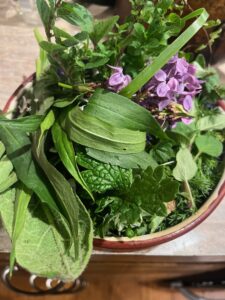
Where is there abundance in your ecosystem? There’s a lot of abundance to be found out in the world, and it is a good time to start learning about how to find that abundance and work with it. Including many “invasive species” which offer food, medicine, and resilience. Last year, we had yet another bad drought, but in the fall, there was so much autumn olive. I mean, there was SO, SO much. More than any one of us could pick. In just one afternoon, my friends and I went into this field, and we came out with gallons and gallons after picking for only two hours–and these are considered noxious invasive species that have no value. And there in the middle of the drought, they produced more than any garden.
I have also found that there’s so much food falling everywhere, and people just ignore it! How many apple or walnut trees do you pass regularly in the fall that have massive amounts of fruit or nuts just lying there on the ground? Pick those apples! Make applesauce, store the apples in your cellar or even in a bucket in your backyard, ferment them into hard cider, or even make your own vinegar. How many years are acorns, walnuts, or chestnuts just covering the sidewalks? Pick them up, learn how to make food from them or even ink. Not every year will have abundance in all areas. But when there is abundance, embrace it and invite your friends!
Where is there abundance and waste in the human system? The amount of human-generated waste, especially food waste, is mind-boggling. It happens all the time, everywhere. It happens with catered food, at the back of grocery stores, and in the USA it is so bad that most sources estimate 30-40% of perfectly good food goes to waste. Find ways of redirecting those waste streams into your life. I’ve never had such a good time as sneaking around at night, dumpster-diving in the back of grocery stores. But you didn’t hear that from me! Another thing I often do is get food waste that is expired (or food waste from events) to feed to my chickens. The chickens produce eggs, and everyone is happy, especially the chickens!
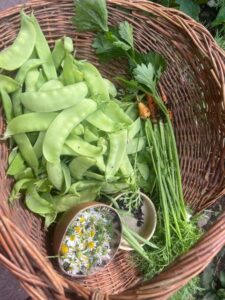 Who do you know that might be able to join you on your journey? If you haven’t already started to do so, meet with your neighbors and friends. Take an inventory of your skills, the tools and resources you each have and may be able to share, and the kinds of things you often have in abundance. Make a plan to start sharing those things: through barter, trade, or even gift economies. I hear so many people now saying how they don’t have any friends, they don’t know anyone….now is the time. Many people are afraid, they are feeling isolated, and they can feel the need to gather. So gather. Share. Strengthen your connections to others. Start new connections. A lot of people ask me how to do this…there are many ways. Start a skill-sharing group, invite neighbors over for a fire, post a local flyer in a feed store–whatever it is, do it, and find even a few folks to walk the journey with you.
How can you reduce consumption and seek alternatives? What can you avoid? What do you need to plan for? It can be very helpful to look at what you are consuming on a regular basis. What do you actually need? How could you provide that need in 1-2 alternative ways? What do you enjoy but you could live without? Could you replace any of these needs with resources more locally produced or obtained? Can you produce even a small amount of your needs yourself? Remember, you may need to think outside of the box about this. Consider that modern advertising has screwed with our brains very badly and has conflated wants and needs. What do you need? Food, shelter, warmth, clothing, and community. Take stock in what you need to survive and what you need to be happy. And recognize we can–and need to learn–to get along with less.
How can you produce some food? If you are already producing food, how do you produce more food? Given both the rising global trade wars and the rising tolls of climate change on the planet’s ability to produce mass-scaled agriculture, this is an obvious step for all of us. If you have a garden, double the size of your garden this year. If you are new, find ways of producing even a small amount of food. This might be microgreens on your counter or buckets of tomatoes on your patio; it might be foraging for opportunistic (invasive) species in your local park; or it may be finally taking out your lawn and putting in a food forest. Whatever you were thinking about doing, now is the time to act. While you are doing that, think about perennial plants that can withstand heat, drought, and flooding and plan for a warming and drying climate.
What about my medications? This seems like one of the toughest ones on this list, and it takes work, but for many people, it is very do-able. Look to nature’s healing and herbal medicines. Because I’m an herbalist, I always like to talk about herbal medicine, and I’ve seen the profound amounts of healing nature’s medicine can provide. Humans, plants, and mushrooms evolved together, and we need each other. Herbal medicine is more sustainable, and most of the healing that you need can be foraged or grown. All ecosystems produce local medicines that we need. Taking a step back from the allopathic, consumer-driven healthcare systems that enslave us financially and physically is a huge step. This step can lead to more health and healing in the long-term and build a much closer relationship with the living earth. Find an herbalist, work with them, and stop being a slave to the healthcare system. Learn herbalism yourself, learn how to take care of your body’s needs and produce your own food and medicine. Even if you are on a lot of medications, determine which ones you need and which can be replaced (and many competent herbalists can help you with this). Even if herbs can’t completely replace your medication at this moment, they can probably supplement your medication, and you may be able to eliminate some of it (a very common one to replace as a starter are the proton-pump inhibitors for GI distress).
What if I don’t have the resources to do this? I already talked about building a good library. A physical library of books is worth its weight in gold (ideally a lot of books from the 1970’s, and certainly books published before 2022 unless you have a reputable author you know didn’t use AI to generate drivel). A library can help you fill in the skills that you don’t yet have and will be there regardless of what happens to our technology. But also, there are always people in your community who know how to do things. Find those people, seek them out, and learn and grow together.
Where do I find the time to do this? Yes, friends, the exhaustion is real. I am weary on a bone-deep level, and I’m sure you are too. I used to have a job to do, and now I do the jobs of 5 people, and we’ve been in crisis mode for 5 years, and they keep asking for more and more. Not to mention the exhaustion of everything happening in the world. The question I’d ask is: how much are you doomscrolling or on social media every day right now? How many hours of your life are being wasted each week with despair, talking about it, hand wringing, and general frustration or fear? I’m guessing that for many people, if you simply took even 15 or 30 minutes of time you are wasting on your phone, you could start to learn new skills, learn how to procure or produce necessary resources, and create a viable plan for yourself, your family, and your loved ones. That would be 30 minutes of really important time you are spending each day or each week, rather than giving it to the machine.
With that said, there’s a reason we all spend money and consume. Our society makes it really hard to do anything else. We are all worked to death by design. We aren’t meant to have leisure time to pursue anything. We are meant to be slaves to this system. To be clear, it’s almost always easier to use fossil fuels. It’s always easier to take the one use and the convenience in modern society. Everything I wrote above takes more time. It takes time to grow carrots, dig them, scrub the dirt from them, and add them to your stew pot–rather than buy a plastic bag of carrots at the grocery store. But as we disentangle ourselves from a collapsing system, the above becomes more and more necessary. Those of us to try extraordinarily hard not to make it easy get overwhelmed and overworked. So pick your battles, starting with your basic needs, and go from there. Even an hour or two a week on the above will make a difference.
For me personally, I have found that doing the above kind of work is the balm to my soul. I can’t keep reading the headlines or following every insane thing that is happening, and I certainly can’t look at it every day. I do my civic duty, showing up, making calls to my representatives, and staying informed. But beyond that, I am not giving my energy or soul to this system. I am, instead, redirecting that energy to building a better world and making sure my family and friends are on the path of meeting their own needs too. And you know what? That also reduces my fear, it reduces my anxiety, and it gives me purpose.
The stuff above is stuff I’ve been writing about for a really long time on this blog, although not always framed in these terms–and it’s more important now than it was 5 or 10 years ago. If you live in the USA and many other places, we are quickly watching our basic social net become dismantled. Right now, people depend on the government and corporations for most, if not all, of their needs. And let me tell you, that time is quickly ending. The government and the corporations don’t owe you anything and they won’t care for you if times get tough. But as we watch this social net continue to be dismantled, the ideas I’m presenting here are going to be more important than ever before. We have to learn to rebuild our local communities and cultures of mutuality. And that’s how we not only survive, but thrive, just like that dandelion in the sidewalk.
Finding the Cracks in the System and Bringing Others On Board
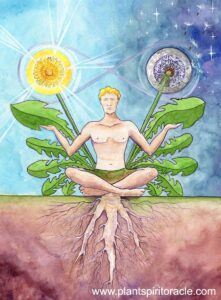
Once you start learning how to collapse gracefully and are starting to create some alternative streams of your basic needs, invite others along for the ride- see where the leverage points are in that concrete sidewalk known as modern civilization and how you might get your roots in and break up that concrete. The way I see it is this: those who hold nature in reverence and have the skills are the ones who can help the rest of humanity along to restore some sanity and help them realize that there are alternatives. We are the dandelions breaking up all that concrete, spreading food, medicine, hope, and joy. Ultimately, shifting to a life-affirming and nurturing culture is about exposing and getting a lot of people on board to return to reverence for nature, respectful interactions, and nature-centered thinking and action. We need to get these ideas into circulation in as many ways as we can. And I think as things collapse, they will be on board, and they are going to need people to help guide the way.
I don’t know what this looks like for you. Each of our lives is different, and we live in different communities and contexts, and we all have different skillsets. I’ll share a bit about what’s been happening in my own community with my herbalism and wild food foraging teaching, and maybe this will help spark your own ideas.
When I first returned to Pennsylvania, I attempted to replicate the thing that worked in Michigan so well–starting a Permaculture group and bringing the community together around regenerating the land, growing food, and many permauclture practices. Permaculture here, in this rural and very conservative area pretty much fell flat on its head. I met some cool people who were doing it, about four of us total in our entire county, but it just didn’t have broad appeal. Nobody knew what it was. People did not show up. Unlike when I lived in Michigan, we didn’t have a lot of different places to visit or sites to look at. It became clear to me that permaculture community organizing wasn’t the way, and after several years of trying, I gave up on it. Around that time, I also started teaching plant walks and herbalism classes — and wow, did people show up for that. I’ve been teaching herbalism and plant walks in my community for 10 years, ever since I moved back to Pennsylvania. When I would do my free plant walks (I usually do about 5-8 per year for different local organizations), I was getting 50-70 people showing up. People from all walks of life. Clearly, there was something here–I saw a crack in the sidewalk, and I took root. Every time I gave a plant walk, people wanted more. Much more. I’d always have many people requesting more herbalism instruction, deeper knowledge, or hanging out and foraging. They also were very resonant with the way I taught foraging and wild medicine, which focuses on reciprocation (my philosophy and handouts are here, and you are free to use them too). They felt part of nature, and they wanted more.
The other side of this is that I live in a rural area, and our healthcare system is completely failing. And it has noticeably gotten much, much worse in the last few years. People either A) don’t have insurance, B) are too afraid to use it due to high costs, or C) even if they have insurance, can’t find or keep a primary care provider of any kind. Forget finding a specialist.. The wait for a specialist at present is over a year, and you either wait or drive 1.5 hours into the city, and even then, it can be difficult to get an appointment. In addition, the collective level of health for most people is declining. I’ve gone through 9 primary care providers in 10 years and am currently without one after the new one I attempted to get 3 months ago left. And that’s happening everywhere here in the USA. This means that, rather than any of us having actual regular healthcare, we get sporadic care when things get really awful. A lot of people are trying to fill in the gaps with herbs, but without good herbal knowledge and systems of thinking like an herbalist, that can get hard to do (especially if you are using the Internet for herbal information; the internet is very crappy now with AI generated summaries, who give nothing important).
So in my case, there were two big cracks (opportunities): one is the desire for people to reconnect with their land and learn something about the uses of the land. I realized that this demand was there, and people could either be taught in a good way or it could be taught in a bad way. I’d rather teach it myself in a good, reverent way than have some random yodel teach it in a bad way, and there are enough of those out there in foraging groups on the Internet. The second crack was the failing rural healthcare system. Based on that, I teamed up with my sister (who is also a fantastic herbalist and healer), and we formed the Pennsylvania School of Herbalism and have been offering classes, walks, and free community education. We have herbal apprentices that help us take our work even further, even sponsor herbal conference–the Hawthorn Botanical Gathering–and people are growing in their awareness. I see herbalism as one of the “gateways” into this deeper nature-based awareness, living, and connection. It is a way for people to realize the healing power of nature, that they are part of nature, and to learn to value nature because nature can literally heal them and feed them. (Shocking to people who are used to having every need provided for by the store and the system). People have the direct opportunity, especially with the traditional Western herbalism and locally-based herbalism that I teach, to take their health into their own hands with the healing power of nature. And this work is only growing in importance as we continue to see the collapse of many things, including the potential collapse of the social net that provides healthcare to low-income individuals and the rising cost of medicine. I think our school will continue to evolve as the collapse happens, and we are in a great place to help our community shift and respond.
Concluding Thoughts
Begin by preparing yourself so that you don’t need to depend on the system as much–and if you are already doing this, do some more. Deepen the practice. Collapse gracefully and intentionally. And keep your eyes open for opportunities to help others and build our new paradigm. Find the cracks, the opportunities that are widening with the collapse. Do what you can do, in your own human capacity, with your own means. You are enough, and everything and anything you give is enough. Consider that part of your spiritual work in the world. Remember–if enough of us do just this, we can replace the old and broken paradigm. And that, my friends, is worth getting up every day for. It is worth living for, and it is worth your energy and time.
PS: If you are anywhere near Western or Central Pennsylvania, I would welcome you to check out the Pennsylvania School of Herbalism’s spring and summer offerings!


This has been an excellent series of posts. While the idea of self-sufficiency is absurd in a world in such transition, too many people continue to hold to the notion. The only way through is community, which, of course is why community is under such brutal attack.
Thanks for the comment, Michael! I think that the US, at least, is somehow still holding onto these ideas of rugged individualism. But the way I see it is that Self sufficient doesn’t get you very far if your community is hungry. The best way to do it is making sure everyone is fed. These are hard times, but they will be a lot harder if we don’t all help each other.
I like the idea of making more of what we need instead of buying it! I do as much as I can, making repairs on things instead of buying new. I was wondering if one can make their own saline solution for a nasal rinse? That would eliminate all the packaging that gets thrown away. Thoughts? Thank you, Andrea
Andrea–good for you! Have you researched a neti pot? That may give you more insight on creating a nasal flush solution. Wishing you happiness and great health.
Hi Andrea, yes, this is very easy to do and many herbalists do it. The other thing is that you can add a range of herbs depending on the condition you are using for the nasal rinse. The Herbal Academy has a great article on it: https://theherbalacademy.com/blog/natural-allergy-relief-nasal-rinses-eye-washes-herbal-steams/
These are very easy to make and very effective. You can choose herbs based on the use (e.g. hot and dry, stuffy and damp, etc).
We are definitely in a time of breaking down the old and beginning anew. In these thresholds of our time I feel the collective present is so lucky to be alive. Even if times feel hard, in my experience I see all information as being provisional. What a wonderful time to not get stuck in the muck but to take personal responsibility and grow through this challenge into an upgraded version of myself. I wish everyone else great good fortune and joy!
Hi Kelly, that’s a wonderful attitude to have and I’m glad you are sharing it! And yes–all information is provisional. I don’t trust most of what I read (I’ve had two encounters with the news media through my work, and both of the “national headlines” were so far off base it was laughable. So I assume every article I read has the same problems). This means its hard to know what is true. Still, we do whate we can! I think taking personal responsibility and work on our own self-growth is the name of the game right now!
Thank you for reading and your comment.
I saw a meme yesterday that said, “So far, 2025 feels like being awake during surgery.” I appreciate these collapse writings. They echo what I have been thinking and feeling but that doesn’t help alleviate the anxiety and dread. Onward through the fog!
Hi Jennifer, wow, that’s a really apt metaphor. I think everyone has anxiety and dread. A lot of what I’m describing here helps me alleviate some of that. If I feel like I’m doing something and something valuable, it is more important than just sitting around being anxious. Onward together though the fog!
Thank you for the compliment – and know that I have learned at least as much from you as you have from me.
I’m glad you are writing about collapse in the way that you are. It’s very much needed, especially your discussion about how to respond to the ongoing medical industry collapse. Knowing alternatives to keep ourselves and those around us as healthy as possible is super important!
Hi Claire, you are most welcome and inspiring! I do think I might do a whole post on the collapse of the medical industry. I think too many people don’t see alternatives and really, in most cases, the herbs are better. There are things the modern medical industry is really good at provided you get access and a good provider (acute conditions requiring surgery, like appendicitis; diagnosis, etc). But most longer-term and chronic conditions are best addressed with herbs and holistic approaches. I am seeing so many people through the herb school leaning into their own healing. The affordability and access is becoming a huge issue around here.
Thank you Dana for your wise advice and knowledge. It is very much needed now in these terrible times. I’ve been making my own tinctures from lemon balm, usnea and hawthorn. Next step is mother wort and turkey tales. Stay safe and well.
Hi Rhonda,
That sounds great–those are good plants for these times. Make sure when you do the turkey tail, you do the double extraction: I have an article here on the Druid’s Garden, but its older than the one I posted at the PA Herb School: https://www.paherbschool.com/mushroom-medicine/double-extract-mushroom-tinctures/
My daily herbs right now are burdock (nourishing support, detox, alterative, GI support), cacao (everything but especially bringing joy), hawthorn (cardiovascular health and emotional heart healing), solomon seal (joints, flexibility), st johns wort (uplifting the spirits), New England aster (lung health, asthma), plus an immunity supporting fire cider. I switch them out about every month.
“there is a crack in everything, that’s how the light gets in”
-Leonard Cohen